The Mediterranean Electricity
Interconnection Perspective

On this page

4

The Mediterranean Electricity Interconnection Perspective

4.1

Presentation of the transmission projects

Interconnection projects have been proposed for updated assessment due to multiple drivers. Interconnectors can provide benefits such as improving market efficiency and reducing cost for end users, integrating more renewables, enhancing security of supply and stability of power networks, etc.

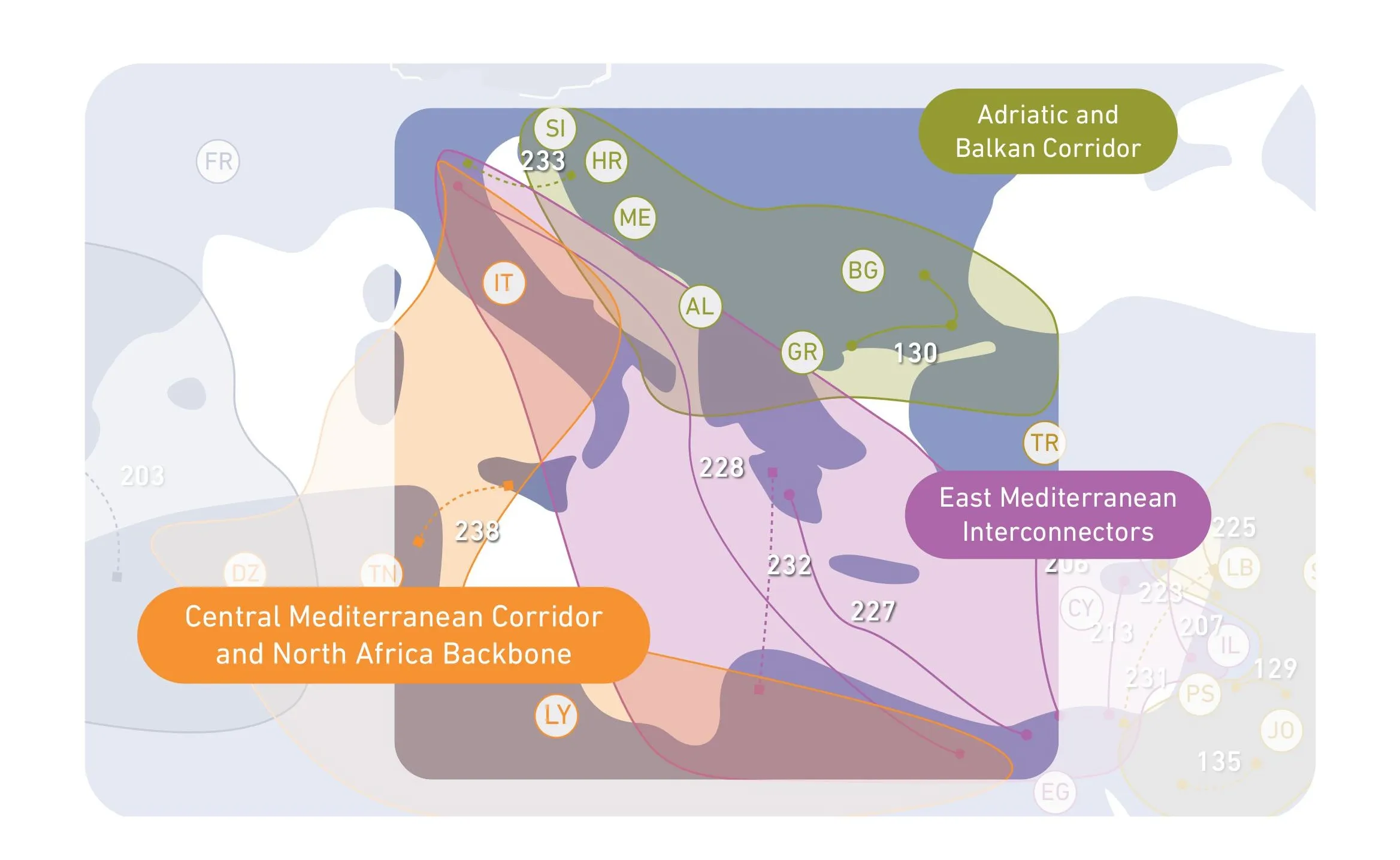
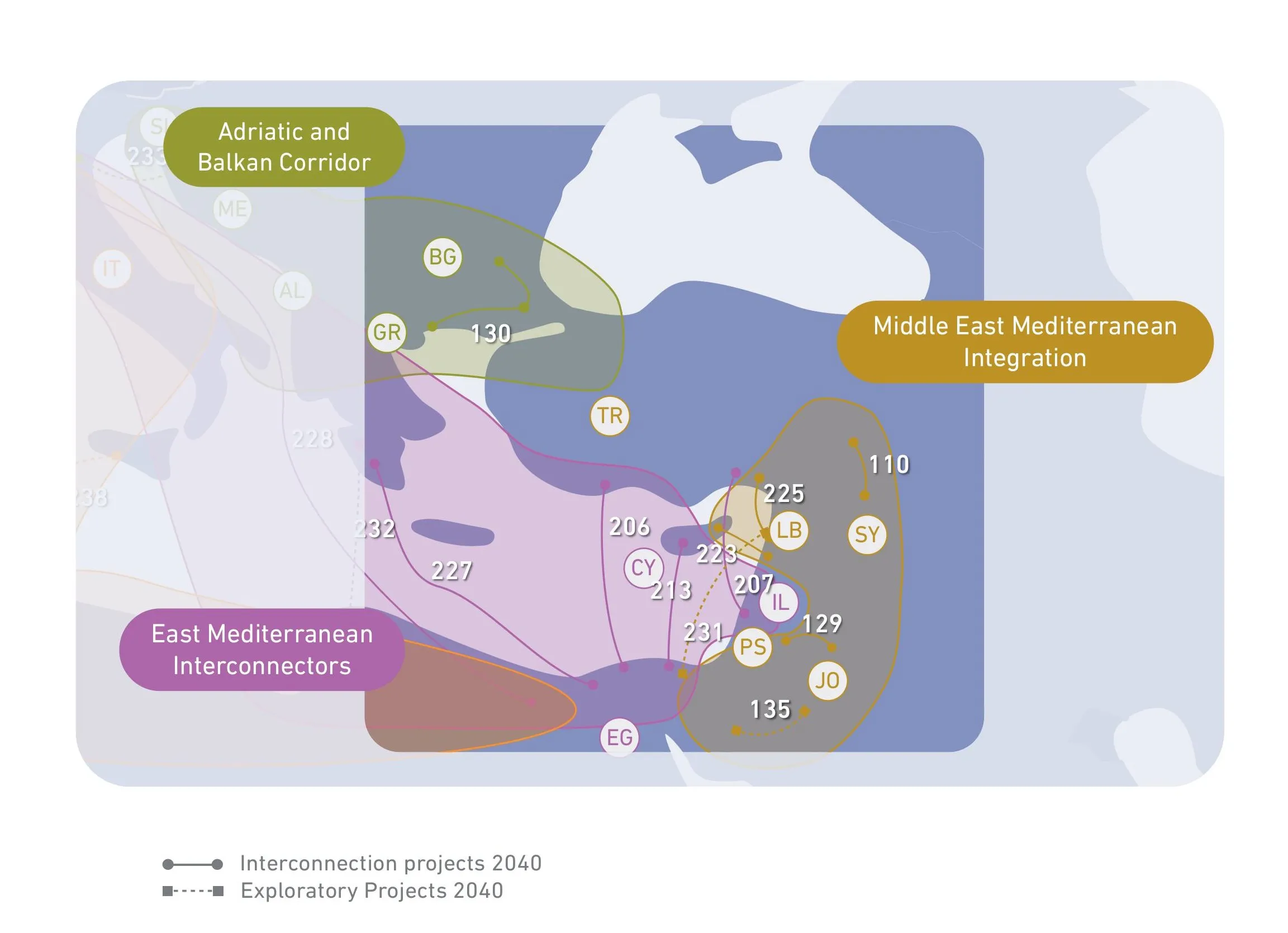
In this edition of the Mediterranean Electricity Interconnection Perspectives Med-TSO members proposed a total of 11 interconnection projects and 7 exploratory projects to be  assessed, as presented in Figures 9 to 11.

projects-in-western-mediterranean-region
Figure 9: Projects in Western Mediterranean Region
projects-in-central-mediterranean-region
Figure 10: Projects in Central Mediterranean Region
projects-in-eastern-mediterranean-region
Figure 11: Projects in Eastern Mediterranean Region

Projects have been clustered into the following five corridors or regions to better reflect common drivers and needs while also reflecting common geographic and network characteristics.

Projects Corridor/RegionProjects covering the Corridor/RegionNominal transfer capacity (MW)Potential expected benefit from the clusterDetailed benefits
West Mediterranean CorridorProject 201: Morocco – Portugal±10001.1, 1.2, 2.1, 3.1, 3.2, 3.3, 3.4
Project 203: Algeria – Spain (Exp)±10001.1, 1.2, 2.1, 3.1, 3.2, 3.3, 3.4
Project 137: Morocco - Spain (4th link) (Exp)±7001.1, 1.2, 2.1, 3.1, 3.2, 3.3, 3.4
Central Mediterranean Corridor and North Africa BackboneProject 238:nItaly – Tunisia (2nd cable) (Exp)±6001.1,1.2, 1.3, 3.1, 3.3, 3.4, 4.1
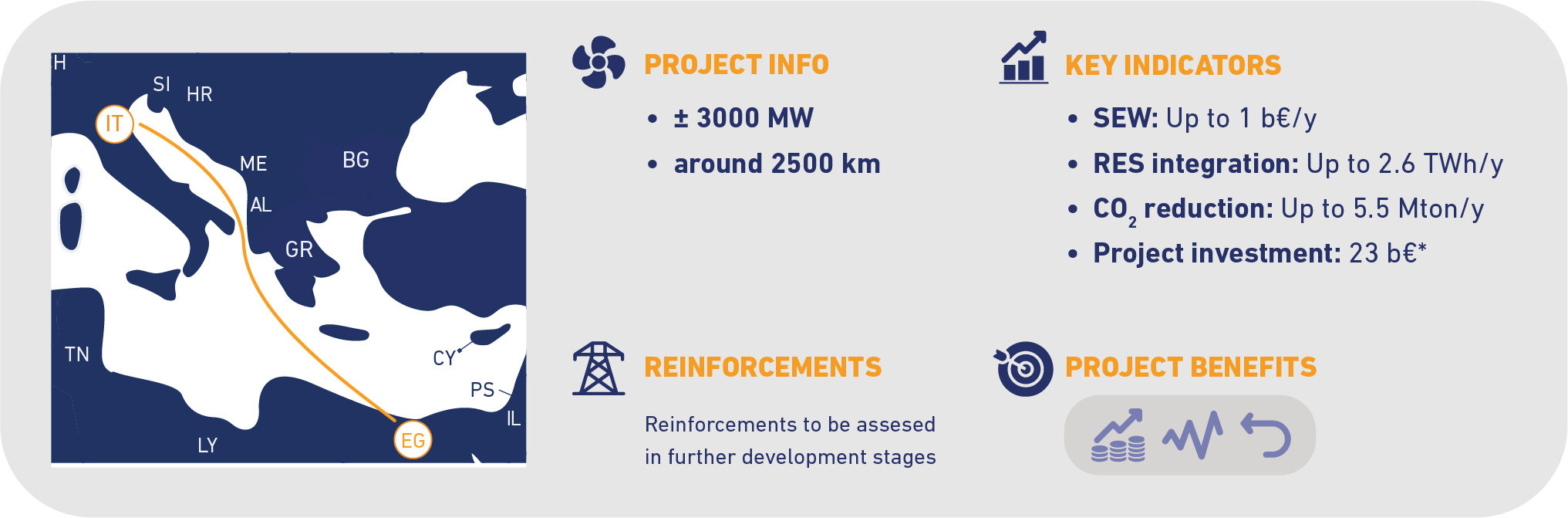
East Mediterranean InterconnectorsProject 228: Egypt – Italy±30001.1,1.2, 1.3, 3.1, 3.2, 3.4, 4.1
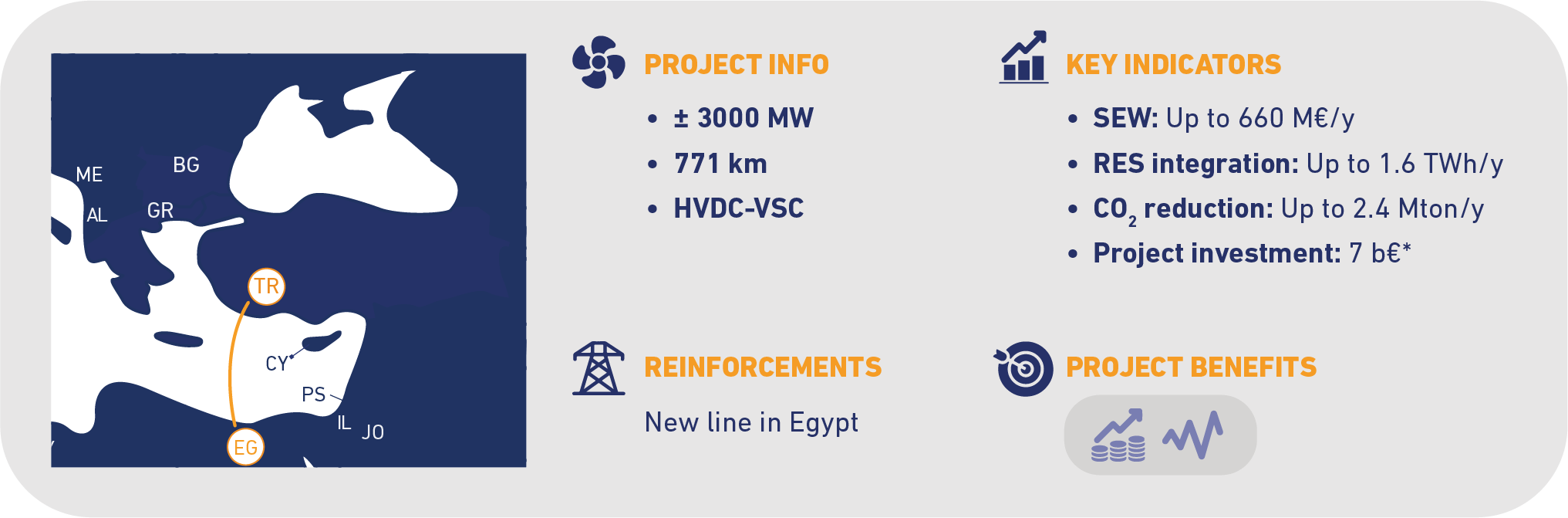
Project 206: Egypt – Türkiye±30001.1, 1.3, 3.1, 3.2
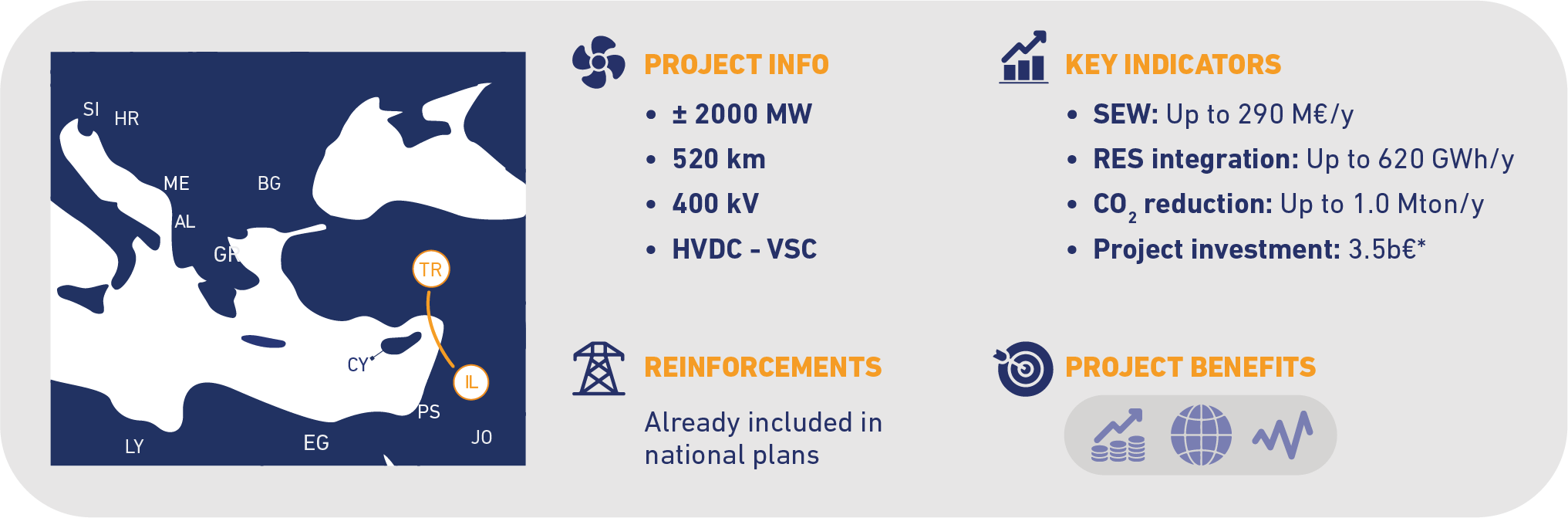
Project 207: Israel – Türkiye±20001.1, 1.2, 1.3, 2.1, 3.1, 3.2, 3.4
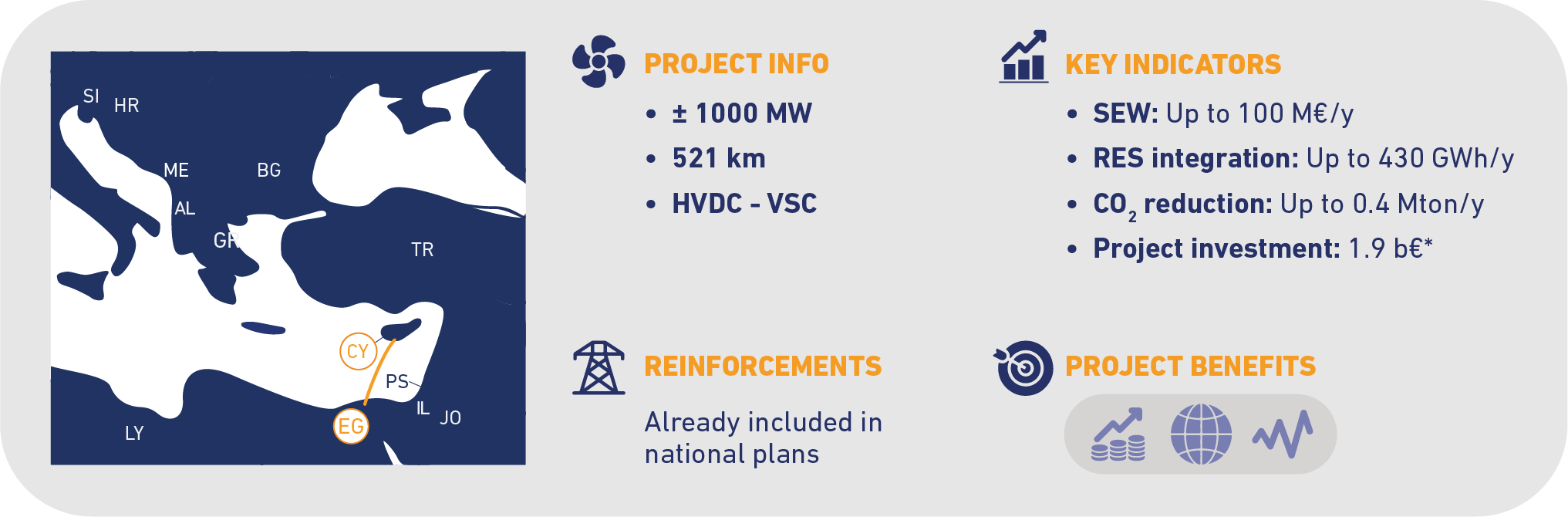
Project 213: Cyprus – Egypt±10001.1, 1.2, 1.3, 3.1, 3.2, 3.3, 3.4
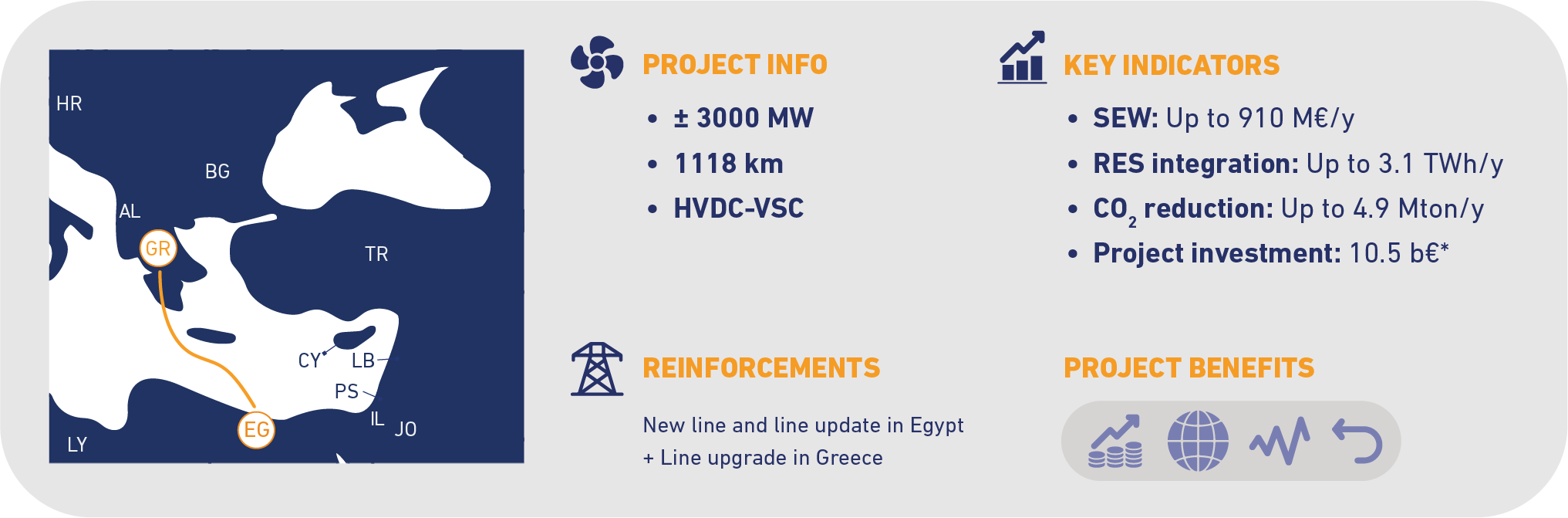
Project 227: Egypt – Greece±30001.1, 1.2, 1.3, 2.1, 3.1, 3.2, 3.3, 3.4, 4.1
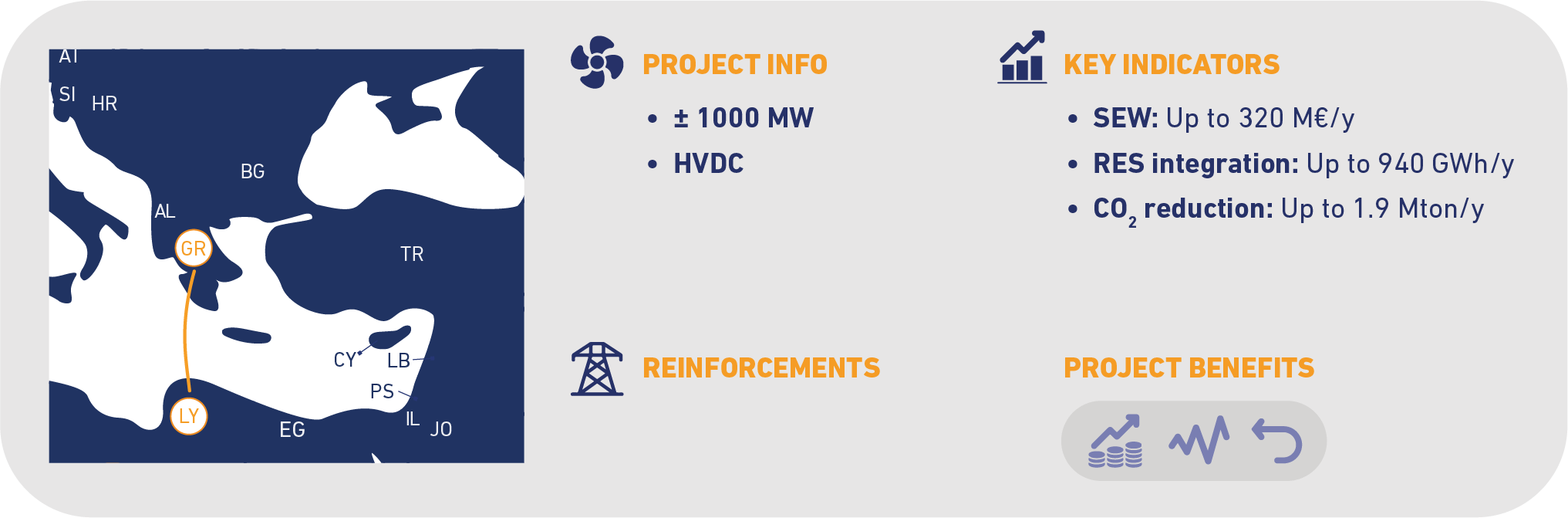
Project 232: Greece – Libya (Exp)±10001.1, 1.2, 1.3, 3.1, 3.4, 4.1
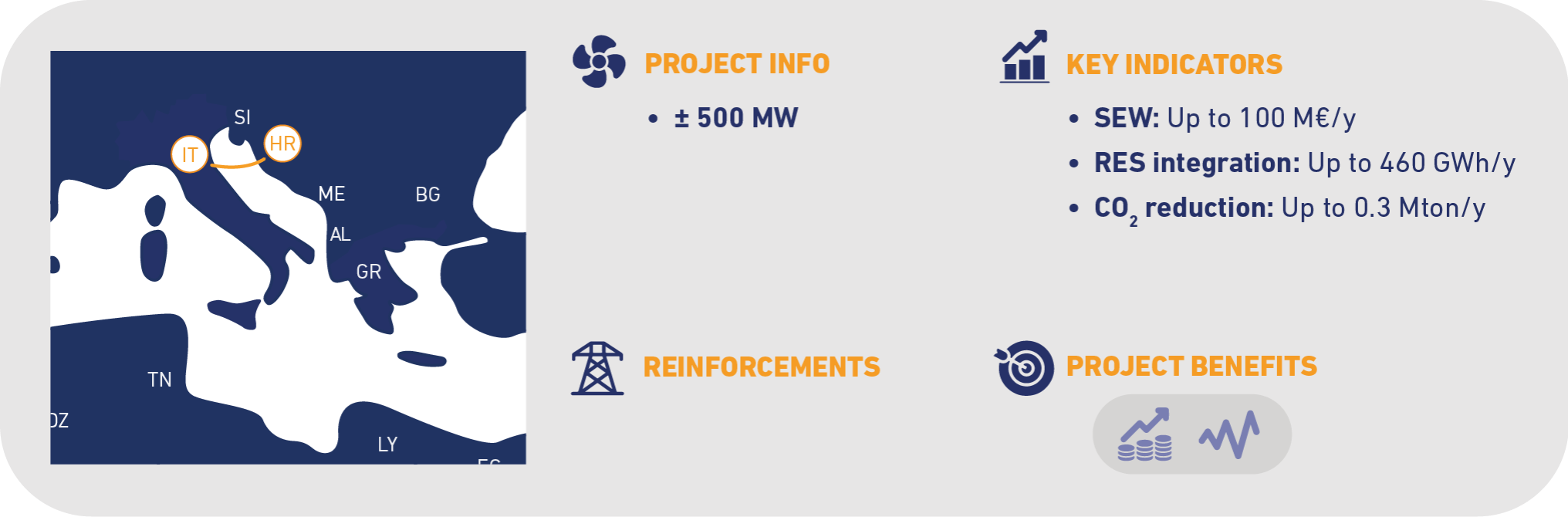
Adriatic and Balkan CorridorProject 233: Croatia – Italy (Exp)±5001.1,1.2, 3.1, 3.2, 3.3, 3.4, 4.1
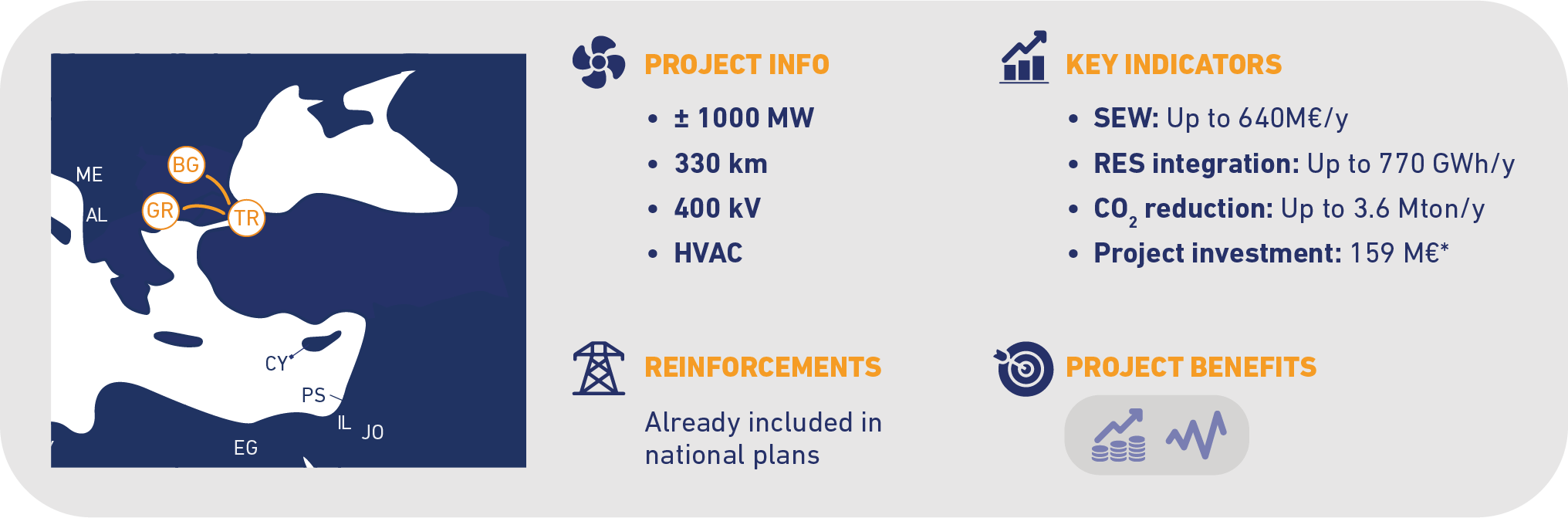
Project 130: Bulgaria – Greece – Türkiye±10001.1, 1.2, 3.2, 3.4
Middle East Mediterranean IntegrationProject 231: Egypt – Lebanon (Exp)±5001.3, 2.1, 3.4, 4.1
Project 225: Lebanon – Türkiye±2501.1, 1.2, 1.3, 2.1, 3.1, 3.2, 3.3, 3.4
Project 223: Cyprus – Lebanon±2501.1, 1.2, 1.3, 3.1, 3.2, 3.3, 3.4
Project 110: Syria – Türkiye±6001.1, 1.3, 3.4
Project 129: Jordan – Palestine-2001.1, 1.2, 1.3, 2.1, 3.1, 3.2, 3.3, 3.4, 4.1, 4.2
Project 135: Egypt – Jordan (Exp)
±9001.1, 1.2, 1.3, 3.2, 3.4, 4.1

Table 5: List of projects and main figures

CategorySymbolDetailed Project Benefits Legend
1. Welfare, Sustainability,and SoS1.1) Reduce high price differentials between different market nodes/countries
1.2) Positively contribute to the reduction of RES curtailment and CO2
emission levels
1.3) Contribute to solving adequacy and security of supply issues
2. Isolation2.1) Fully or partially contribute to resolving the isolation of countries in terms of power system connectivity or to meeting specific interconnection targets
3. Operation Flexibility3.1) Introduce additional system restoration mechanisms
3.2) Improve system flexibility and stability
3.3) Increase system voltage stability
3.4) Contribute to the integration of new RES generation capacity
4. Operation Flows4.1) Enable cross-border flows to overcome internal grid congestions
4.2) Mitigate loop flows in bordering systems

Table 6: Legend of project merits

4.2

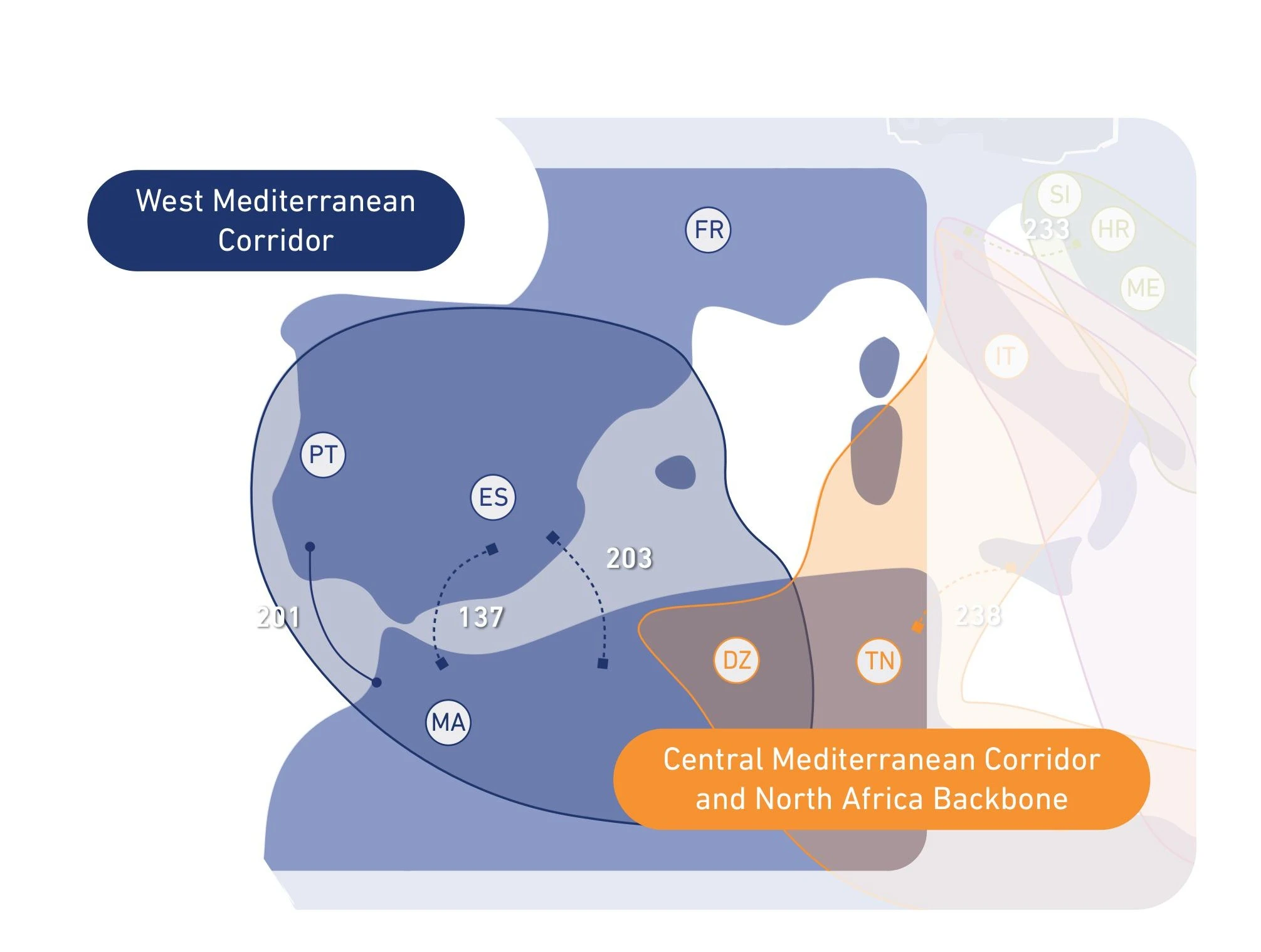
The West Mediterranean Corridor

The West Mediterranean The West Mediterranean Corridor orridor features features the assessments of one project involving Morocco the assessments of one project involving Morocco and Portugal and two exploratory initiatives concerning, respectively, the fourth interconnection between Morocco and Spain and a submarine link connecting Spain with Algeria. The third AC interconnection cable between Morocco and Spain had already been evaluated in the update d Mediterranean Master Mediterranean Master Plan. These projects involve countries that jointly contribute to the further exploitation of the existing integration between the Iberian electricity market and the Maghreb region. As a result, the expected benefits of these projects are aligned and reflect a clear positive contribution in terms of:

  • Reducing the electricity price differential between the Iberian educing the electricity price differential between the Iberian market and the Maghreb arket and the Maghreb countries countries, benefit beneting from the lower prices observed in Spain and Portugal from the lower prices observed in Spain and Portugal.

  • Increasing the integration of renewables, namely through the avoided curtailment in Spain and Portugal that can be channe and Portugal that can be channelled to the Maghreb countries led to the Maghreb countries through through the envisaged

  • projects, leading to a reduction in gas-fuel projects, leading to a reduction in gas-fuelled generation in Morocco and Algeria ed generation in Morocco and Algeria.

  • Meeting specific interconnection targets, which are quantitatively set in the case of the EU Countries; however, it should be noted that projects between EU and non-EU countries do not impact the EU electricity interconnection target in any way.

  • Enhancing operational flexibility through the technical characteristics of the technologies at use, namely those associated with VSC-HVDC technology, such as black-start capability and voltage control.

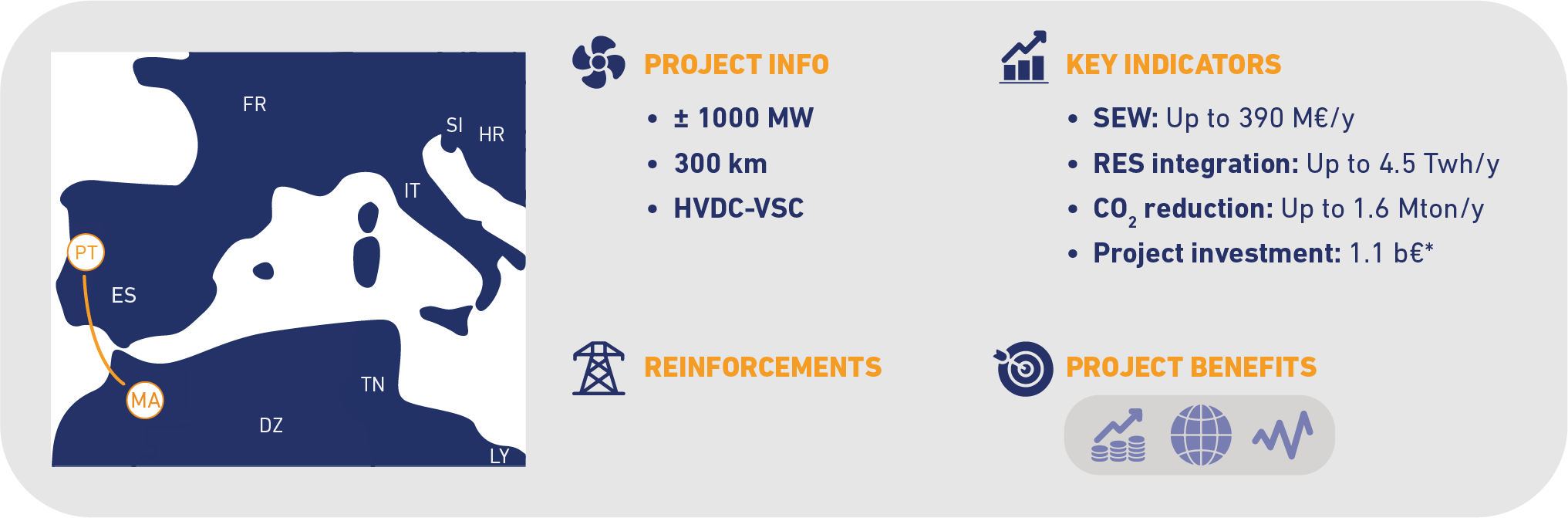
Project n°201: Morocco – Portugal (MA – PT)

project-n201-morocco-portugal
*Converted at USD/EUR 1.0389 as of 31/12/24

Morocco and Portugal, two neighbouring countries with growing energy cooperation, are establishing their first electricity interconnection. The project consists of a new HVDC link, based on VSC technology, between the Ben Harchan substation in Morocco and the Tavira substation in Portugal, with an expected NTC of about 1,000 MW and a total length of roughly 300 km, including around 228 km of submarine cable.

In recent years, both TSOs – ONEE and REN – have conducted feasibility studies confirming the mutual benefits of this interconnection. This project is conceived as a joint effort to strengthen cooperation and optimise system operation in the context of increasing renewable energy integration. In this regard, the expected benefits of this initiative are threefold: narrowing the electricity price gap between the Iberian market and the Maghreb countries, enhancing the integration of renewables, particularly by preventing curtailment in both Portugal and Morocco, and reducing Morocco’s reliance on gas-fired electricity generation.

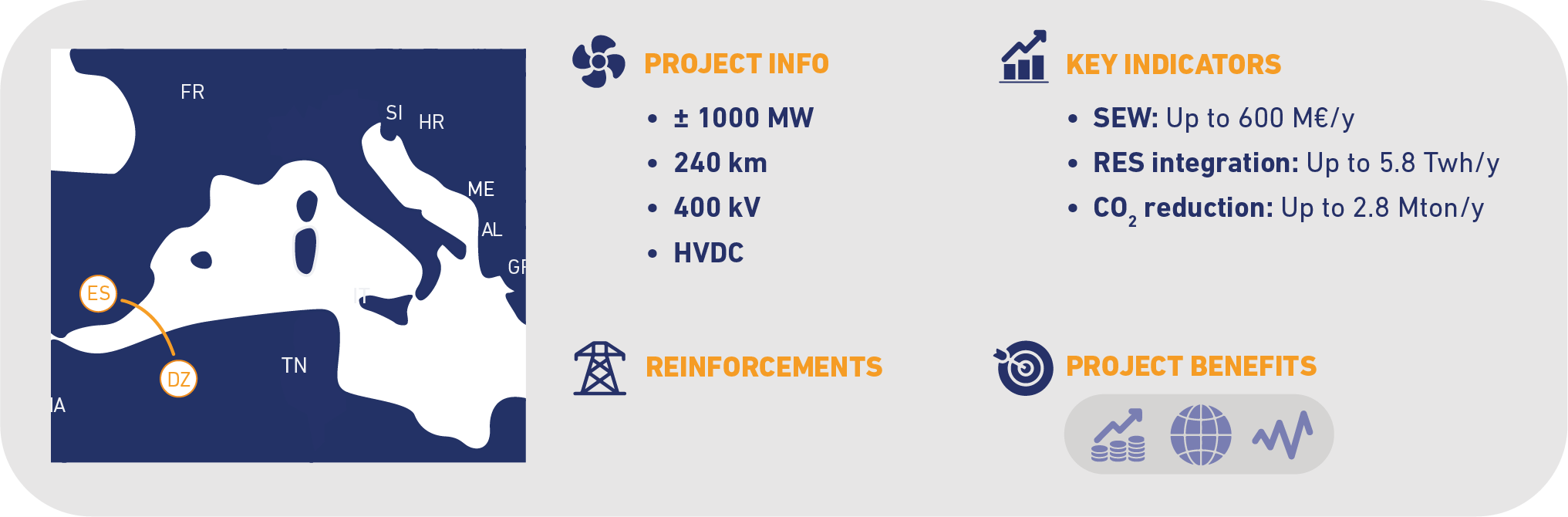
Exploratory Project n° 203: Algeria – Spain (DZ - ES)

project-n203-algeria-spain
*Converted at USD/EUR 1.0389 as of 31/12/24

A potential submarine electrical interconnection between Spain and Algeria has been assessed as an exploratory project for the 2040 horizon. This initiative aims to strengthen energy cooperation across the Mediterranean, and the potential benefits are significant in terms of RES integration, power flow optimisation and grid operation, in order to guarantee security and adequacy standards in Algeria.

Economically, the project could offer long-term benefits by diversifying energy sources, improving supply security in Algeria, and fostering regional energy markets. It may also contribute to decarbonisation goals by enabling the exchange of low-carbon electricity.

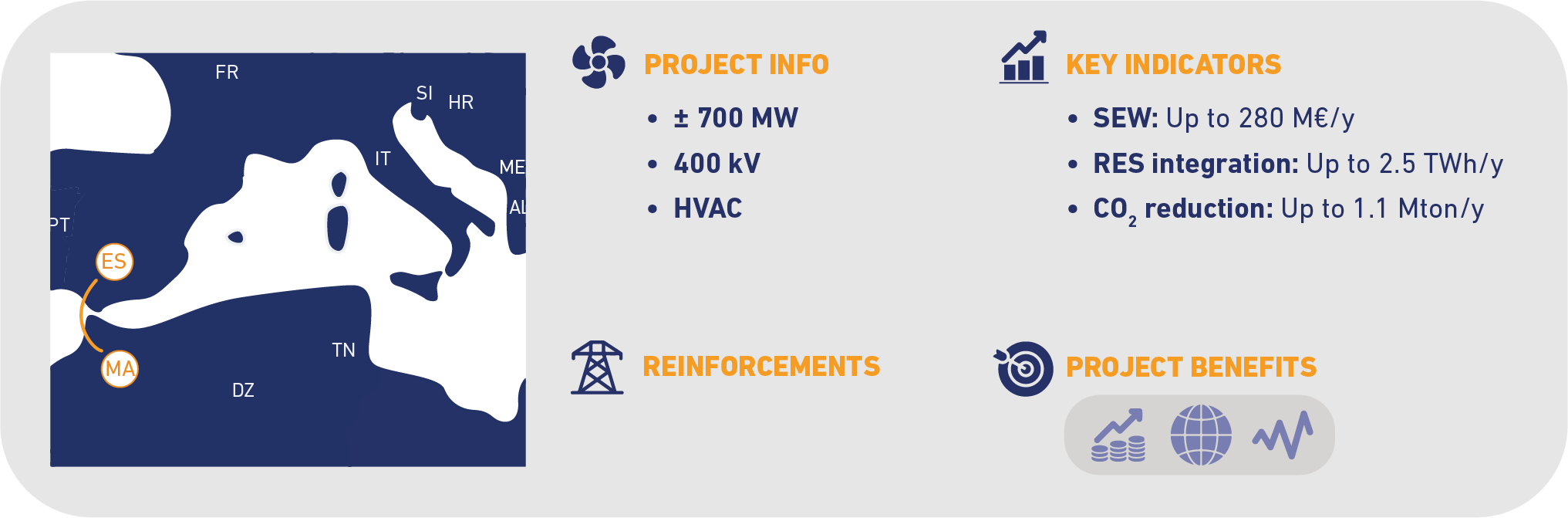
Exploratory Project n°137: Morocco – Spain (4th interconnection) (MA – ES)

project-n137-morocco-spain
*Converted at USD/EUR 1.0389 as of 31/12/24

The Morocco–Spain electricity interconnection is a cornerstone of regional energy cooperation, playing a strategic role in bolstering the security of supply for both countries. The existing infrastructure, along with the third interconnection currently in its planning stage, reflects a mutual commitment to enhancing grid resilience and enabling integration of renewable energy sources.

Looking ahead to 2040, the expansion of this interconnection with a fourth cable emerges as a particularly compelling exploratory project. This potential addition could further reinforce system flexibility, facilitate deeper renewable integration, and support the security of the interconnected systems.

4.3

Central Mediterranean Corridor & North Africa Backbone

This group includes a single exploratory project focused on an additional interconnection between Italy and Tunisia. In light of the ongoing progress on the Italy-Tunisia border, there could be a growing rationale for assessing the feasibility of a second link between the two countries. This initiative falls within the broader objective of strengthening interconnections among Maghreb countries and linking them to the Italian network, which presented a high integration rate of renewables in its energy mix together with an overcapacity of the thermal power plants. This exploratory analysis is therefore intended to support long-term strategic reflection and guide future decisions regarding cross-border infrastructure between Italy and Tunisia.

Demand in Tunisia is expected to double over the next decade, while the Italian TSO is expecting demand saturation and is therefore seeking new market opportunities to optimise renewables power flows to and from the islands of Sicily and Sardinia. Furthermore, STEG expects that the reinforcement of this interconnection would reduce the need for continuous investments in power production units and provide access to guaranteed electricity at a lower cost. A new link would also enhance system flexibility and enable a greater integration of renewable energy sources on both shores of the Mediterranean.

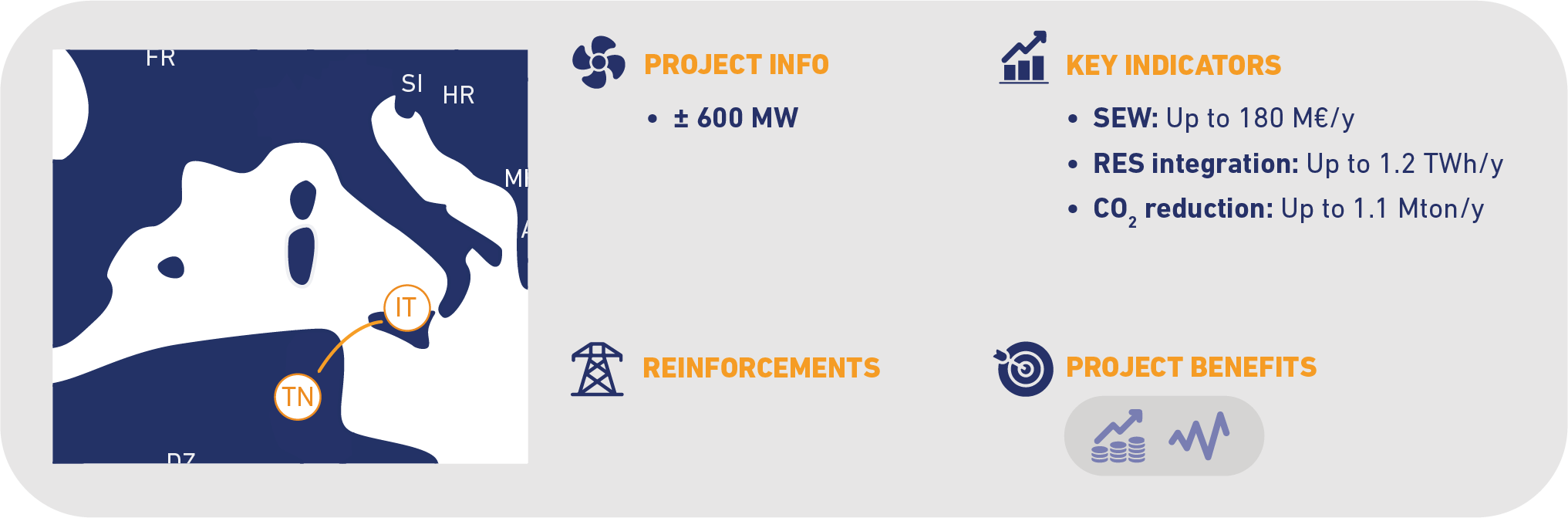
Exploratory Project n°238: Italy – Tunisia (2nd project) (IT – TN)

*Converted at USD/EUR 1.0389 as of 31/12/24

The Italy-Tunisia interconnection (Project n° 204, cf. Master Plan 2030), currently under construction, constitutes one of the first electricity infrastructure projects under development along the Europe-North Africa border and the first HVDC link between the continents. This milestone in Euro-Mediterranean energy cooperation will enable greater renewable energy integration while enhancing the security, adequacy, and flexibility of both national power systems. Given Project n° 204’s progress, exploring a second Italy-Tunisia link presents an opportunity for forward-looking regional energy planning. This preliminary assessment examines how increased interconnection capacity could address evolving Mediterranean P ower System needs without implying development commitments.

This potential interconnection has been studied within the TEASIMED 2 framework as an exploratory project aimed at assessing its behaviour and the potential benefits it may offer. Currently, no formal joint development activities exist between Terna and STEG for a second HVDC link, and this project remains technically and procedurally independent from Project n° 204.

The proposed second submarine interconnection between Sicily and Tunisia would feature 600 MW of transmission capacity, bringing total interconnection capacity between the two countries to 1,200 MW. While detailed specifications remain undefined, the length and maximum depth can be assumed comparable to Project n° 204.

The CBA performed on this project highlights the significant potential benefits that this cross-border connection offers. In fact, despite being studied in the presence of the first interconnection project between Italy and Tunisia (Project n° 204, cf. Master Plan 2030), the benefits remain substantial and compelling.


4.4

The East Mediterranean Interconnectors

This group includes five interconnection projects and one exploratory study. These projects aim to strengthen connections between countries across the two shores of the Eastern Mediterranean region, by creating new electricity corridors in the region and providing mutual benefits, resulting from the complementary characteristics and energy prices of the countries involved. More specifically, this cluster includes:

  • two interconnection projects linking the Turkish system to those of Egypt and Israel,
  • one interconnection projects linking the system of Cyprus to that of Egypt,
  • one interconnection project linking the Greek system to the Egyptian system,
  • one interconnection project linking the Egyptian and Italian systems,
  • one exploratory project concerning an interconnection between Greece and Libya.

Project n°206: Egypt – Türkiye (EG – TR)

*Converted at USD/EUR 1.0389 as of 31/12/24

The purpose of the project is to establish a connection between northern Egypt and southern Türkiye via the Mediterranean Sea. This interconnection will have a 3 GW capacity and will be implemented as a submarine HVDC link. On the Egyptian side, the implementation horizon and the vast evolution of the Egyptian electrical transmission grid require the addition of a     single circuit 500 kV line, with a total length of 100.5 km.

Egypt and Türkiye are currently undergoing profound changes in their electricity sectors. Egypt continues to rely heavily on natural gas, while Türkiye utilises a more diverse mix that includes coal, natural gas and hydroelectric power. Both countries have set ambitious targets for the integration of intermittent renewable energy sources, which are expected to reshape their electricity landscapes within the next 15 years. Türkiye is adding 5 GW of solar capacity to the grid annually, an amount equivalent to approximately 5% of the country’s total installed capacity. Alongside these initiatives, new interconnection projects, such as the Egypt–Greece and Greece-Türkiye link, are also expected to improve regional power exchange and system flexibility.

This project aims to enhance system reliability, strengthen the security of supply, and support the integration of natural gas, solar, and wind energy resources into the regional grid.

Project n°207: Israel – Türkiye (IL – TR)

*Converted at USD/EUR 1.0389 as of 31/12/24

The project consists of a new interconnection between Israel and Türkiye to be executed through an HVDC submarine cable. The new HVDC submarine link is expected to be implemented using VSC technology.

The project seeks to increase the interconnection capacity between Türkiye and Israel to 2000 MW and develop a new Eastern Mediterranean corridor.

Project n°213: Cyprus – Egypt (CY - EG)

project-n213-cyprus-egypt
*Converted at USD/EUR 1.0389 as of 31/12/24

The project consists of a new interconnection, which includes two power cables (2×500MW) to be constructed between Egypt and Cyprus together with a new 2 x 500 MW HVDC converter station at Burrlus in Egypt. The HVDC cables will terminate in Cyprus at the HVDC converter station at Kofinou, which will be part of the multi-terminal HVDC interconnection between Israel, Cyprus, and Crete.

The project is included in the reference grid and is studied with the TOOT approach. This interconnection will link the two countries via 521km long HVDC submarine cables and will form a corridor between the northeastern and southeastern banks of the Mediterranean. The benefits of this interconnection are considered strategic for both countries in terms of facilitating RES penetration, and supporting security and adequacy standards.

Project n°228: Egypt – Italy (EG – IT)

project-n228-egypt-italy
*Converted at USD/EUR 1.0389 as of 31/12/24

The analysed Egypt–Italy interconnection, proposed in TEASIMED 2 by the Egyptian TSO, EETC, could represent a transformative opportunity to strengthen energy cooperation across the Mediterranean region. As energy systems adopt more renewables, cross-border links like this one     become vital for system resilience, market efficiency, and environmental goals. This ambitious initiative aims to create a more interconnected and adaptable Mediterranean electricity network, supporting present challenges and long-term objectives, with the connection of two geographical extremes of the region.

This HVDC interconnector would enable bi-directional flow of clean electricity, boosting system flexibility and stability. It would help manage surplus renewables during low demand while providing a reliable import route during supply constraints, addressing renewable intermittency and optimising green energy use.

Beyond operational benefits, the project could reduce greenhouse gas emissions by supplying low-carbon electricity to established markets and enhancing competitive pricing through diversified supply sources. It may also spur regional investment, job creation, and energy security, significantly contributing to peak demand coverage and long-term resilience.

The envisioned link would connect western Egypt to northern Italy via an HVDC corridor with 3,000 MW capacity, using a double bi-pole system (each pole approximately 750 MW). The submarine cable would span over 2,500 km beneath the Mediterranean, Ionian, and Adriatic seas, possibly reaching depths of up to 3,000 metres.

Project n°227: Egypt – Greece (EG – GR)

n227-egypt-greece-v7
*Converted at USD/EUR 1.0389 as of 31/12/24

The Egypt-Greece interconnection is studied as the first link between the two countries, as well as an electricity corridor between the northern and southern banks of the Eastern Mediterranean region. The benefits of this interconnection are considered deeply strategic for both countries in terms of RES power flow optimisation and grid operation to guarantee security and adequacy standards. The project will also support Europe’s     efforts to achieve energy security and independence from natural gas.

The submarine HVDC interconnection is planned with a bipolar configuration and a tentative capacity of 3,000 MW, connecting the two national electricity grids via HVDC converter stations located on each side.

Exploratory Project n°232: Greece – Libya (GR - LY)

project-n232-greece-libya
*Converted at USD/EUR 1.0389 as of 31/12/24

This potential interconnection has been studied within the TEASIMED 2 framework as an exploratory initiative. Within this exploratory context, the project envisions a submarine interconnection between continental Greece and Libya modelled with a transmission capacity of 1,000 MW.

Conducting a preliminary assessment at this stage offers a forward-looking approach to regional energy planning as it allows for a better understanding of how an interconnection could meet the evolving needs of the Mediterranean Power System, without implying any immediate commitment to development. This exploratory analysis is intended to support long-term strategic reflection and guide future decisions on cross-border infrastructure between the two countries.

4.5

The Eastern Adriatic and Balkan Corridor

This corridor includes an interconnection project that involves Bulgaria, Greece and Türkiye and an exploratory project connecting the system of Italy with that of Croatia. The former project aims     to increase the existing NTC between Türkiye and Continental Europe Synchronous Area (CESA), which are already synchronously connected. The increased interconnection capacity between Türkiye and CESA via the Bulgaria – Türkiye – Greece project will enable transfer of a large quantity of renewable energy from Balkan region to Türkiye. It will result in reduction of thermal generation and CO2 emissions in Türkiye.

Project n°130: Bulgaria – Türkiye – Greece (BG – TR – GR)

*Converted at USD/EUR 1.0389 as of 31/12/24

The project consists of two new AC overhead interconnections, one linking Greece and Türkiye, and one connecting Bulgaria and Türkiye. The initiative is jointly promoted by IPTO, TEİAŞ and ESO, and the exploratory study has been conducted by Med-TSO within the framework of the TEASIMED project.

The Turkish power system has been synchronised with the Continental Europe Synchronous Area (CESA) network since September 2010, with Greece and Bulgaria being part of the CESA to Türkiye transmission corridor. Currently, there are five interconnections within this corridor: two linking Greece and Bulgaria, one Greece and Türkiye, and two Bulgaria and Türkiye.

At present, some limiting factors, unrelated to the grid expansion, remain, but are in the process of being resolved. Consequently, the total NTC value is currently limited to 1,560 MW in the CESA to Türkiye direction and 1,080 MW in the opposite direction. Two-thirds of this capacity is allocated to the Bulgaria – Türkiye interconnection while one-third is allocated to the Türkiye – Greece link. The commissioning of the second interconnection between Greece and Bulgaria (Nea Santa–Maritsa), together with the reinforcement of the 400 KV South-East Bulgaria network, has increased the NTC to 1,350 MW in the Bulgaria to Greece direction and to 800 MW in the opposite one.

Greece is currently well interconnected through one DC and several AC interconnectors. In addition to its links with Türkiye and Bulgaria, Greece is interconnected with North Macedonia, Albania and Italy. The Turkish network, aside from its interconnections with Greece and Bulgaria, is asynchronously interconnected with the grids of Syria, Iraq, Iran, and Georgia.

Exploratory Project n°233: Croatia – Italy (HR – IT)

*Converted at USD/EUR 1.0389 as of 31/12/24

The proposed energy interconnection between Croatia and Italy holds significant potential to strengthen energy security, market integration, and renewable energy utilisation across the Adriatic region. This infrastructure would support the decarbonisation and electrification efforts of both countries while providing broader regional benefits.

Beyond the direct bilateral advantages, the interconnection could serve as a key enabler for the deeper integration of the Balkan Peninsula into the European energy system. It would establish an Italy–Croatia connection and position Italy as a regional energy corridor in conjunction with existing Montenegro and Greece interconnections.

This potential interconnection has been studied within the TEASIMED 2 framework as an exploratory project aimed at assessing its behaviour and the potential benefits it may offer. Currently, there are no formal joint development or study activities in progress between Terna (Italy) and HOPS (Croatia).

This link would represent the first submarine interconnection between Italy and Croatia, and for the scope of this exercise, has been studied with a capacity of 500 MW. Technically, the proposed HVDC submarine cable would traverse the northern Adriatic, where proximity and about 50 metres of sea depth present favourable conditions and lower project challenges.

4.6

Middle East Mediterranean Integration

This cluster includes four interconnection projects, as well as two exploratory studies, as listed below, aimed at reinforcing the connection of the countries of the Eastern Mediterranean region. Specifically, this cluster includes:

  • two interconnection projects linking the Lebanon System to those of Türkiye and Cyprus,
  • one interconnection projects linking the System of Turkey to that of Syria,
  • one interconnection project linking Jordan to Palestine,
  • one exploratory project linking the Egyptian and Lebanese systems,
  • one exploratory project increasing the transfer capacity between Egypt and Jordan.

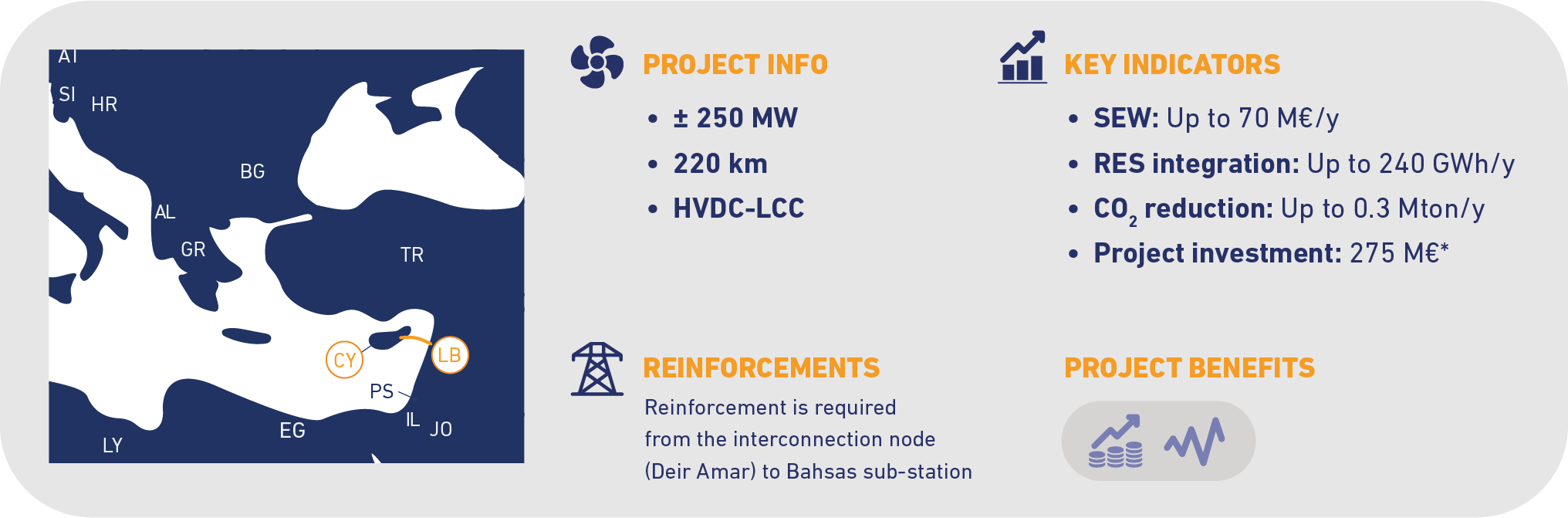
Project n° 223: Cyprus – Lebanon (CY – LB)

project-n223-cyprus-lebanon
*Converted at USD/EUR 1.0389 as of 31/12/24

The Cypriot grid is currently isolated since Cyprus is an island. Cyprus is actively pursuing electric grid interconnection projects to overcome its energy isolation and enhance regional energy security. The project is aiming to increase the interconnection capacity between Cyprus and Lebanon to 250 MW and develop a new corridor in the Eastern Mediterranean.

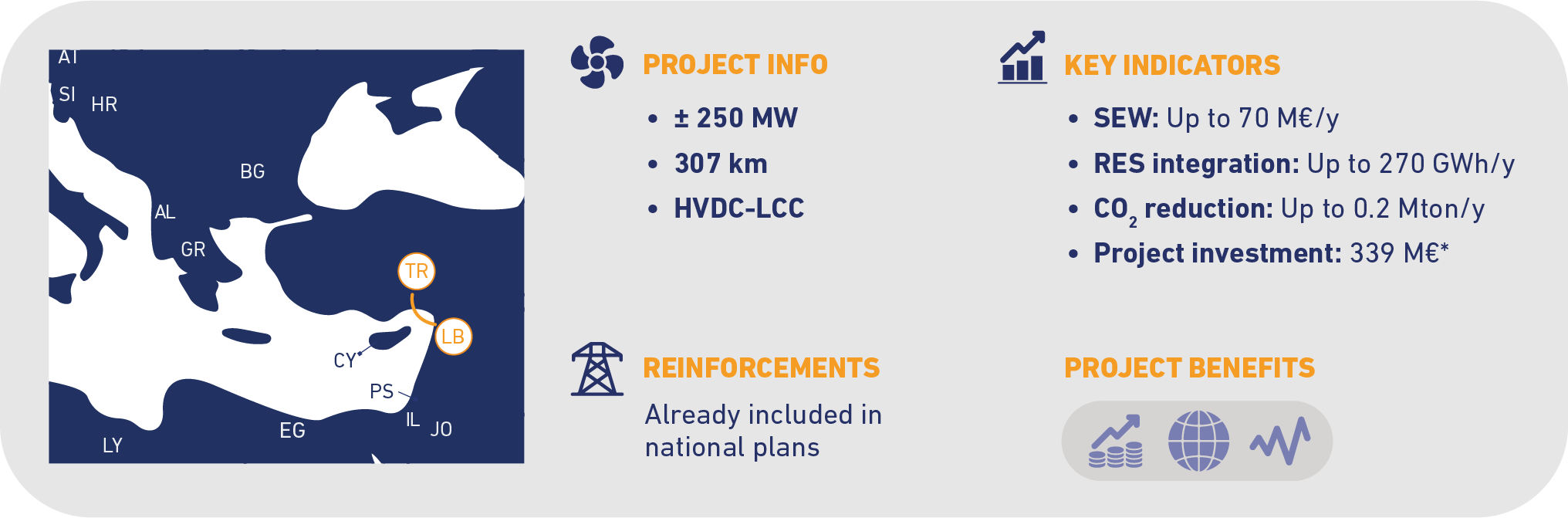
Project n°225: Lebanon – Türkiye (LB – TR)

project-n225-lebanon-turkiye
*Converted at USD/EUR 1.0389 as of 31/12/24

At present, there are no interconnections between Lebanon and Türkiye. The Turkish grid is currently interconnected with the grids of Greece, Bulgaria, Syria, Iraq, Iran, Nakhchivan (Azerbaijan), and Georgia.

Through the interconnections to Greece and Bulgaria, the Turkish grid is interconnected to Continental Europe Synchronous Area (CESA). Due to limiting factors unrelated to the grid expansion, total NTC values are limited to 650 MW in the CESA to Türkiye direction and 500 MW in the opposite direction. The Turkish and Syrian grids are connected via a 400 kV AC overhead line, which remains physically in place but was deactivated following Türkiye’s integration into CESA, due to synchronisation issues. Plans to restore its functionality through a back-to-back (B2B) converter station on the Turkish side exist, but the investment is currently on hold pending stabilisation in Syria. The Turkish grid is also connected to Georgia (B2B) and Iran (asynchronously) and through the isolated region method with the grids of Iraq and Iran.

The project aims to increase the interconnection capacity between Türkiye and Lebanon to 250 MW and develop a new corridor in the Eastern Mediterranean.

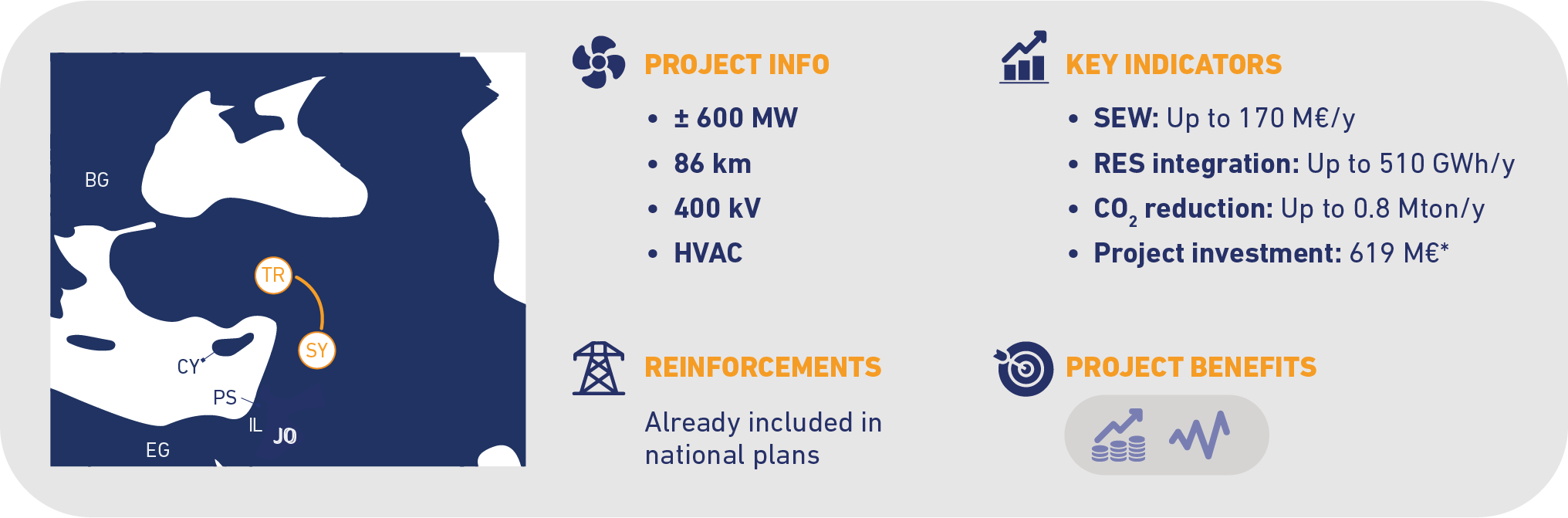
Project n°110: Syria – Türkiye (SY – TR)

project-n110-syria-turkiye
*Converted at USD/EUR 1.0389 as of 31/12/24

The project consists of a new interconnection between Syria and Türkiye, to be implemented through a 400kV AC overhead line and HVDC back-to-back (B2B) station in Türkiye. Its main objective is to further increase the interconnection capacity between the two countries by around 600 MW.

Currently, the Turkish and Syrian grids are linked by a 400 kV AC overhead line, connecting the Haleppo SS on the Syrian side and the Birecik HPP substation on the Turkish side. This interconnection was previously used to connect two units of Birecik HPP in Türkiye, to supply the Syrian network. However, after TEİAŞ synchronously connected to the ENTSO-E network, the line had to be switched off. A back-to-back converter substation is now planned for construction next to the Birecik HPP substation on the Turkish side to enable power exchange through the line. Once operational, it will allow the two grids to be fully connected asynchronously to each other.

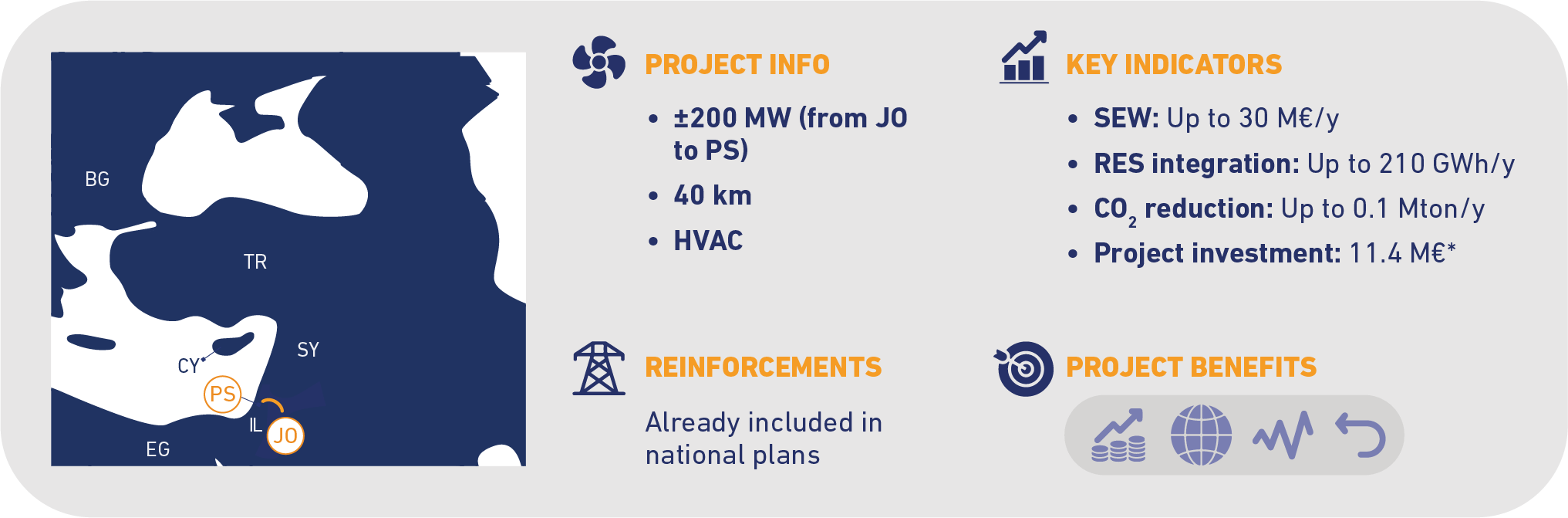
Project n°129: Jordan – Palestine (JO - PS)

*Converted at USD/EUR 1.0389 as of 31/12/24

This project consists of a new interconnection between Jordan and Palestine.

Currently, the Palestinian territories (West Bank and Gaza) depend mainly on Israel for electricity supply. In this regard, the interconnection is expected to increase the transfer capacity from Jordan to Palestine by about 200 MW, to support the regional integration of the Palestinian power system and to mitigate dependence on Israeli provision. The West Bank will also be supplied through the first phase of the interconnection expansion, projected for 2030, by 200 MW on 132 kV link with Jordan to Jericho on an isolated-grid basis, according to the assumptions of Med-TSO Inertial scenario.

The project is promoted by NEPCO and PETL, under the framework of the studies conducted by Med-TSO within the TEASIMED project.

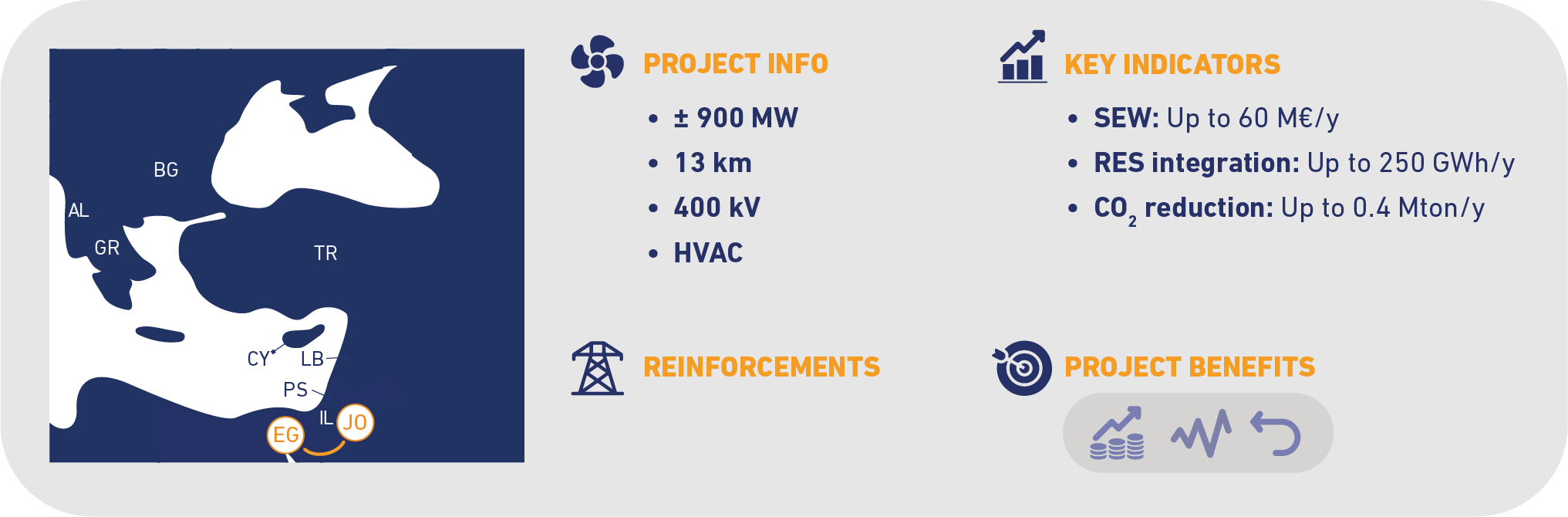
Exploratory Project n°135: Egypt – Jordan (EG – JO)

*Converted at USD/EUR 1.0389 as of 31/12/24

Jordan and Egypt have electrically interconnected since 1998 via a 13 km 400 kV, AC submarine cable (3 + 1 spare) submersed at a depth of 850 m across Taba to the Gulf of Aqaba with an exchange capability of 1,100 MW. The 2040 upgrade project involves enhancing the existing HVAC infrastructure to increase the transfer capacity by an additional 900 MW, bringing the total to 2,000 MW. The main drivers for the project are to strengthen regional grid resilience, support greater renewable energy penetration, and unlock further opportunities for energy exchange and market integration, thus contributing to regional decarbonisation goals and enhancing economic and operational synergies among the interconnected systems.

The Egyptian power grid is currently interconnected with the grids of Libya, Jordan, and Sudan via HVAC transmission links. In parallel, Egypt is developing a major 3,000 MW HVDC interconnection with Saudi Arabia, which is expected to become operational by the end of 2025. At the same time, Jordan and Saudi Arabia are progressing with the establishment of their HVAC interconnection. Once operational, the interconnections between Egypt, Jordan, and Saudi Arabia will enable the integration of their national grids into the Gulf Cooperation Council Interconnection Authority (GCCIA) Grid, which already links the power systems of six GCC countries via a 400 kV network.

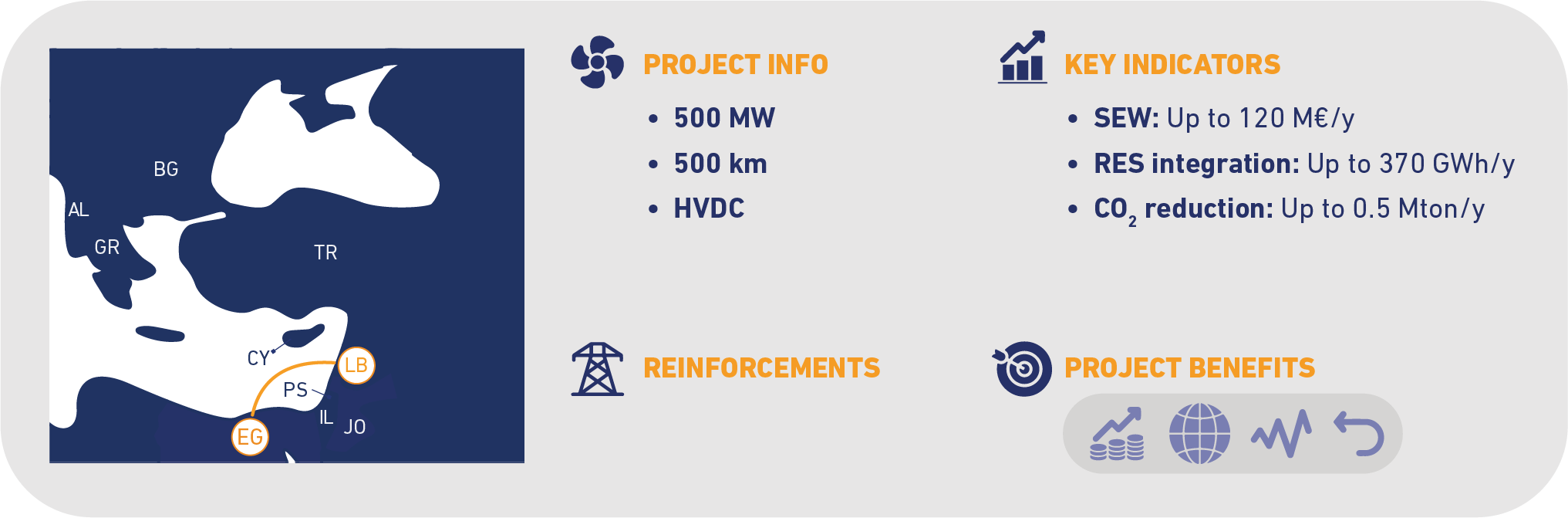
Exploratory Project n° 231: Egypt – Lebanon (EG – LB)

*Converted at USD/EUR 1.0389 as of 31/12/24

The Egypt-Lebanon Electricity Interconnection is a regional energy project designed to enhance electricity trade and improve energy security in the Levant. The proposed project involves the construction of a submarine HVDC cable with an approximate length of 500 km and a planned transmission capacity of up to 500 MW. This strategic link will enhance electricity exchange between the two countries, allowing Egypt to export surplus power, particularly from renewable sources, while providing Lebanon with a stable and reliable supply of electricity to support its grid recovery and long-term energy needs.

The project reinforces broader efforts to integrate Arab electricity markets, fostering economic cooperation and sustainable energy exchange across the Middle East and North Africa (MENA) region.

Interconnections 2040

x x x The interconnections shown in this map are only a graphic representation and they do not show the real position of the interconnection lines

GLOSSARY

AC: Alternative current

CBA: Cost Benefits Analysis

CCGT: Combine Cycle Gas Turbine

DBMED: Mediterranean Database

DC: Direct current

EC: European Commission

EENS: Expected Energy Not Supplied

ENS: Energy Not Served

ENTSO-E: European Network of Transmission
System Operators for Electricity

EU: European Union

GDP: Gross domestic product

GHGs: Greenhouse gases

GWh: Gigawatt hour

HVAC: High voltage alternating current transmission

HVDC: High voltage direct current transmission

IN: Inertial scenario

kV: kilovolt

LCC: Line-commutated current-sourced converters

LOLE: Loss of Load Expectation

MA: Mediterranean Ambition scenario

MEDREG: Mediterranean Energy Regulators

Med-TSO: Association of the Mediterranean
Transmission System Operators (TSOs)

MENA: Middle East and North Africa

MWh: Megawatt hour

MMP: Mediterranean Masterplan

NDP: National Development Plan

NTC: Net Transfer Capacity

OCGT: Open Cycle Gas Turbine

PCI: Project of Common Interest

PINT: Put IN one at a Time

PiTs: Points in Time

PMI: Project of Mutual Interest

PR: Proactive scenario

PV: Photovoltaics

RES: Renewable Energy Sources

SEW: Socio-economic welfare

SoS: Security of supply

TEASIMED: Towards an Efficient, Adequate, Sustainable
and  Interconnected MEDiterranean power system

TOOT: Take One Out at a Time

TSO: Transmission System Operator

TYMNDP: Ten-Year Mediterranean
Network Development Plan

UNFCCC: United Nations Framework Convention
on Climate Change

VSC: Voltage source converters

VOLL: Value of Lost Load

For having a complete understanding of the Project, we invite you to download the complete Project Sheet.